Homelab & Virtualization Stack
The Windows 11 Enterprise host and VMs that power the NAS, firewall, tools, and experiments.
Host Hardware
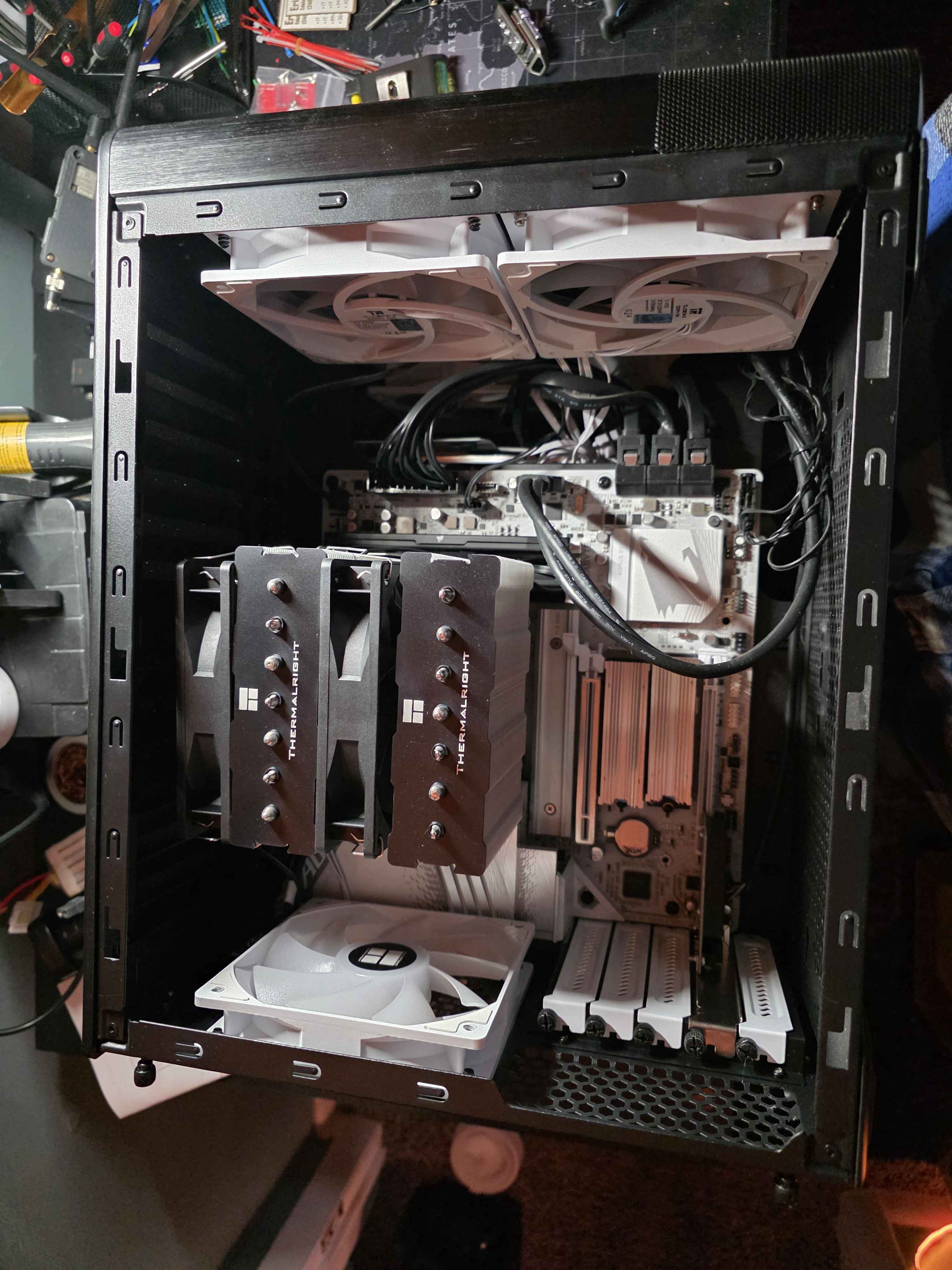
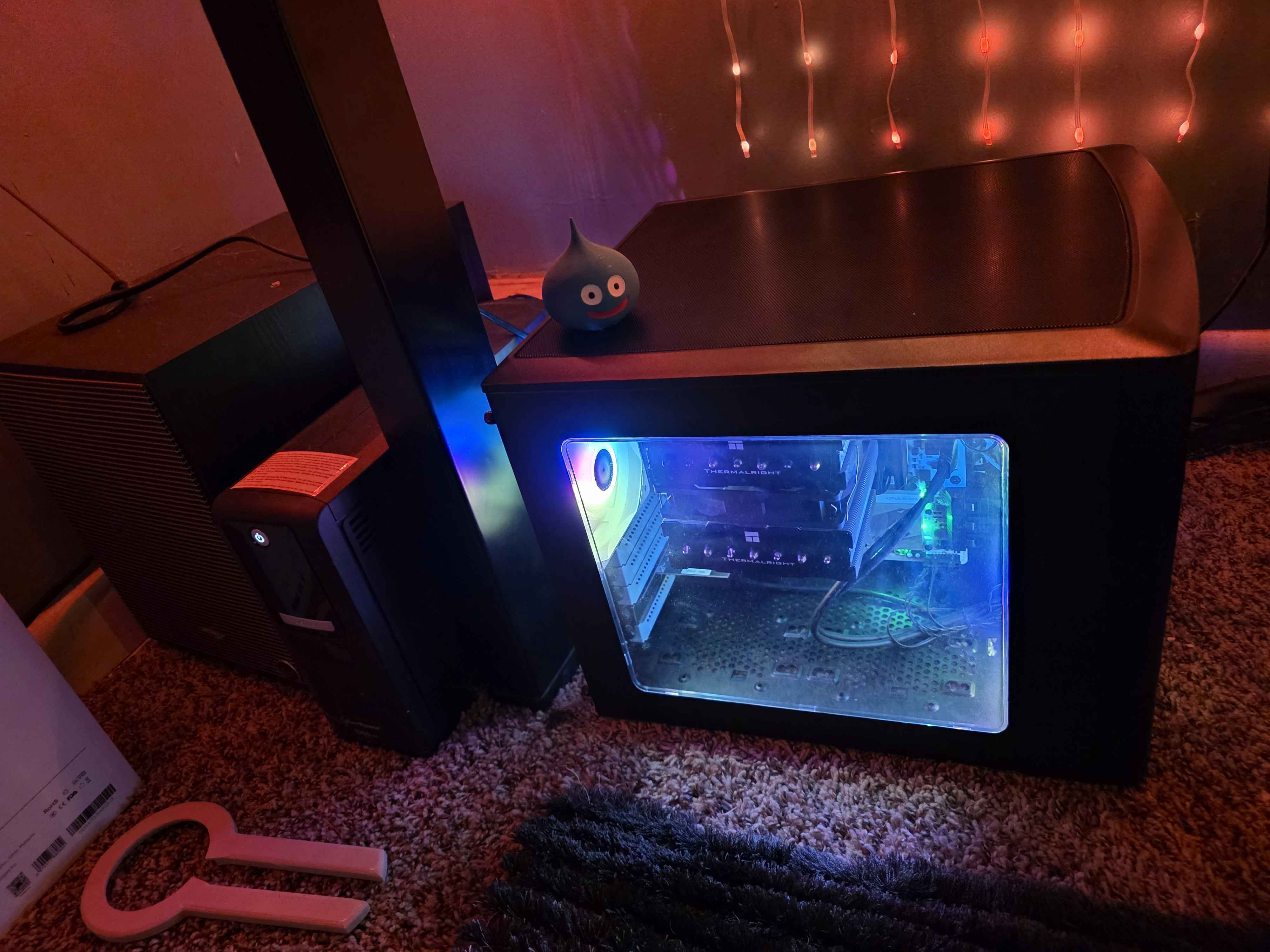
The homelab is built on a compact but high-performance platform designed to support virtualization, storage, and future expansion. It is housed in a Fractal Design Node 804 case and powered by a GIGABYTE Z790M AORUS Elite AX ICE motherboard paired with an Intel Core i9-13900K. The system is equipped with 64 GB of CORSAIR VENGEANCE DDR5 RAM, providing ample memory for running multiple virtual machines and lab workloads simultaneously.
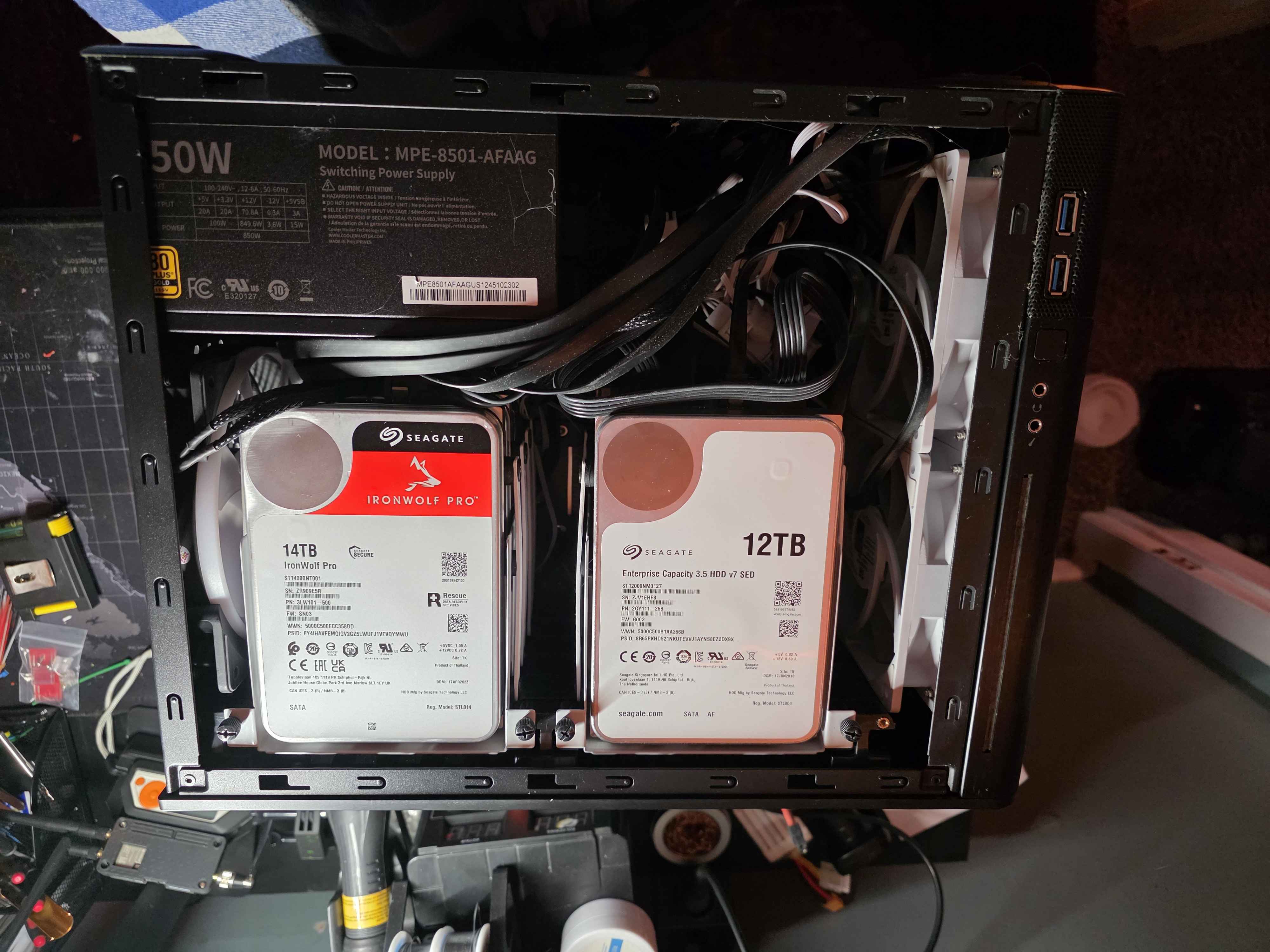
The operating system runs from a dedicated Crucial P3 1 TB NVMe drive to keep host performance isolated from storage workloads. Data storage is segmented across multiple mirrored arrays for redundancy and reliability: two Crucial P3 1 TB NVMe drives in RAID 1 for fast VM and lab data, two Seagate IronWolf 4 TB NAS drives in RAID 1 for general network storage, and two Seagate IronWolf Pro 14 TB drives in RAID 1 for large media and archival data. An additional pair of Seagate Exos X12 12 TB drives is available for future expansion and capacity growth.
Virtualization Setup
The lab is virtualized using Microsoft Hyper-V, with each service deployed as its own virtual machine to maintain isolation and simplify management. Every VM is assigned a dedicated virtual hard disk, typically using dynamically expanding VHDs to conserve storage while still allowing for growth as workloads increase.
Resources are allocated based on the role of each system. Virtual machines are connected to the appropriate virtual network adapters depending on their function (for example, internal services versus perimeter-facing systems), allowing network traffic to be segmented and controlled. Storage placement is also intentional: performance-sensitive VMs and lab tools are hosted on the RAID 1 NVMe arrays for speed and responsiveness, while the NAS virtual machine resides on dedicated HDD storage, where capacity and reliability are prioritized over raw I/O performance.
Older 12 TB Seagate Exos drives are not currently in production use; one drive has failed, and the remaining disk is retained only for testing and performance evaluation. This keeps the active lab environment focused on stable, known-good storage hardware.
VM Inventory & Roles
This area is under construction to list each VM, what it does, and any notes (RAM/CPU allocation, storage usage, network interfaces).
Screenshots & Diagrams